BFK | 01.02.2026 | Goodbye, Dragon Inn (2003)
INFO:
Visningsformat: DCP
Regissør: Tsai Ming-liang
Manusforfattere: Tsai Ming-liang
Språk: Taiwanske
Undertekst: Engelsk
Lengde: 1 time 22 min
NOR:
Regissør Tsai Ming-liang har nettopp gitt ut sin femte spillefilm, «What Time Is It There?» (2001), og et av stedene i filmen er en forfallen kino som han regelmessig gikk til da han var en ung gutt. I en samtale med kinosjefen hørte han at de skulle stenge den permanent. For å bevare teaterets historie ønsket Tsai Ming-liang å lage en kortfilm om stedet. Prosjektet ble imidlertid mye mer ambisiøst og ble senere Tsai Ming-liangs sjette spillefilm, kalt «Goodbye, Dragon Inn» (2003).
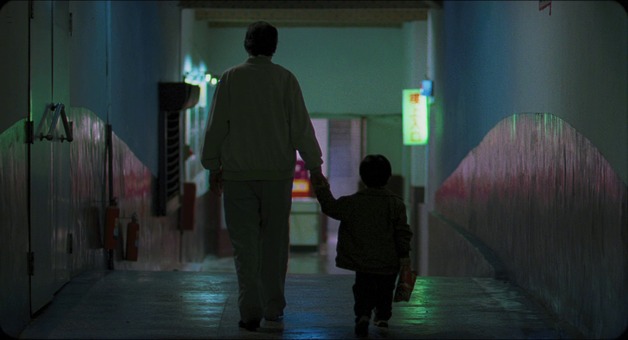
Filmen finner sted på en kino som har sin siste visning før den legges ned. En kino fult av mennesker som ser på King Hu’s «Dragon Inn» (1967), har nå blitt et cruiseområde med bare håndfull av mennesker til stede (Shih Chun, Miao Tian, Yang Kuei-mei) som ser den samme filmen. Filmen starter med kraftig regn og en japansk turist (Kiyonobu Mitamura) som ankommer kinoen. Turisten sniker seg inn i kinoen, og vi følger billettdamen (Chen Shiang-Chyi) mens hun vasker toalettene og spiser bao for å passere tiden. Hun vil dele disse siste øyeblikkene før hun stenger ned kinoen med å gi halve baoen sin til projeksjonist (Lee Kang-Sheng). Men han er ingen steder å finne.
Med en spilletid på 1 time og 22 minutter er det bevisst en utrolig langsom film. Lange takes på 3–4 minutter med karakterer som observerer og går rundt i den snart forlatte kinosalen. Som seer blir du med en gang oppslukt av Tsai Ming-liang’s verden. Tidens gang blir tydelig, og lydbildet er altoppslukende. Med billettdamens benstøtte som treffer gulvet, gir gjenlyd gjennom hele kinosalen, og pistasjskall som sprekker opp i en nesten tom kinosal. Så klisjéaktig som det kan høres ut, føles det virkelig som om du er der med disse karakterene. Også med tilbakevendende skuespillere som har vært i Tsai Ming-liangs tidligere filmer, som Lee Kang-sheng, Cheng Shiang-Chyi, Miao Tian og Chen Chao-jung.
«Goodbye, Dragon Inn» (2003) er en uttalelse om "cinema", og hvordan “cinema” har blitt til gjennom årene. Det er også en ode til King Hu’s film «Dragon Inn», der to av hovedpersonene ser filmen på kino. Mimringer om en svunnen tid. Det blir mye tydeligere hvor viktig denne filmen er som en uttalelse, spesielt når den foregår på kino. Den er en essensiell del av «Slow Cinema»-verdenen, og enda viktigere i Tsai Ming-liang’s imponerende filmografi. Tsai’s bidrag til avstemningen «Sight and Sounds - The Greatest Films of All Time» har filmen hans «Goodbye, Dragon Inn» kåret til en av de 10 beste filmene gjennom tidene. Vanligvis når en regissør gjør noe slikt, kan det virke veldig fullt av seg selv. Men til min overraskelse, etter at jeg så filmen for første gang, virker det ikke rart å si det.
ENG:
Director Tsai Ming-liang has just released his 5th feature film, “What Time Is It There?” (2001), and one of the locations in the film is a rundown theater that he regularly went to when he was a young boy. Talking to the theater manager, he heard that they were going to shut it down permanently. As a way to keep the theater’s legacy, Tsai Ming-liang wanted to make a short film about the location. However, the project became much more ambitious and later became Tsai Ming-liang’s 6th feature film, called “Goodbye, Dragon Inn” (2003).
The film takes place in a theater that has its last screening before closing down. A theater full of people watching King Hu’s “Dragon Inn” (1967), has now become a cruising area with a handful of people in attendance (Shih Chun, Miao Tian, Yang Kuei-mei) watching the same film. The film starts with heavy rain and a Japanese tourist (Kiyonobu Mitamura) arriving at the theater. The tourist sneaks into the theater and we follow the ticket woman (Chen Shiang-Chyi) cleaning the toilets and eating bao to pass time. She wants to share these last moments before closing with giving half her bao to the projectionist (Lee Kang-Sheng). However he is nowhere to be found.
With a runtime of 1 hour and 22 minutes, it’s deliberately an incredibly slow film. Long takes ranging from 3-4 minutes of characters observing and walking around the soon abandoned theater. However, as a viewer you are immersed into Tsai Ming-liang’s world. The passage of time becomes apparent, and its soundscape immersive. With the ticket lady’s leg brace hitting the floor, echoing throughout the theater, and pistachio shells cracked open in an almost empty theater. As cheesy as it may sound, but does truly feel like you’re there with these characters. Also with recurring actors that have been in Tsai Ming-liang’s previous films like Lee Kang-sheng, Cheng Shiang-Chyi, Miao Tian, and Chen Chao-jung.
“Goodbye, Dragon Inn” (2003) is a statement regarding cinema, and with how cinema over the years has become. It is also an ode to King Hu’s film “Dragon Inn” with two of the main cast watching the film in the theater. Reminiscing of a bygone era. It becomes much more apparent how important this film is as a statement, especially taking place in a theater. It is an essential piece within the world of “Slow Cinema”, and even more essential within Tsai Ming-liang’s impressive filmography. Tsai’s entry for “Sight and Sounds - The Greatest Films of All Time” poll has his film “Goodbye, Dragon Inn” as one of the 10 best films of all time. Usually when a director does something like this, it can seem very full of oneself. However, to my surprise after I saw the film for the first time. It doesn’t seem outlandish to state.